Trading Futures Live With Prop Firm Capital
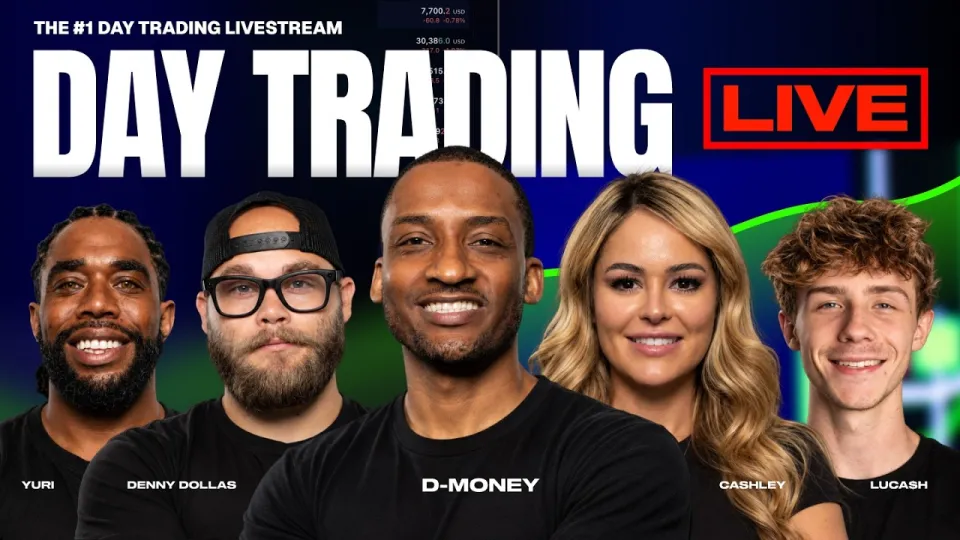
Video: LIVE DayTrading! #1 Watched Futures Trading Show!
Need articles like this for your video? They help promote it on YouTube and Google — order them in the Telegram bot @sat_sit_bot. It writes articles around your video, embeds the video and publishes them on popular niche websites (no ads). Your first 50 articles are free.
· based on the channel Patrick Wieland
Trading futures live means placing real orders on a regulated exchange product while an audience watches, and in most modern setups it means doing that with a prop firm's capital rather than your own. The trader passes an evaluation, receives a funded account, and keeps a share of the profits while the firm carries the downside. That single structure explains almost everything you see on a daily futures stream: the instruments, the position sizing, the obsession with daily loss limits, and the constant talk about payouts.
What trading futures live actually involves
Live futures trading is a real-time process where every decision is executed in the market and visible in the order book, which is what separates it from backtesting or demo accounts. A typical session has a fixed routine:
- Pre-market preparation — checking overnight ranges, economic calendar events and key levels on the main index futures.
- Session selection — most futures day traders concentrate on the New York open, when volume and volatility peak.
- Instrument choice — ES (S&P 500), NQ (Nasdaq 100), YM (Dow), RTY (Russell 2000), plus CL (crude oil) and GC (gold) for macro-driven moves.
- Execution — entries, stops and targets placed in the platform, with size calculated from the account's risk limit rather than from conviction.
- Review — logging the trades, the reasoning and the outcome, which is the only part that compounds over years.
What makes the live format useful for viewers is not the entertainment value but the constraint: a streamer who is accountable in public cannot quietly widen a stop or double a losing position without it being noticed.
How prop firm funded accounts work
A prop firm funded account is a trading account where the firm provides the capital and the trader provides the execution, with profits split according to a contract. The mechanics are fairly consistent across the industry:
- Evaluation phase. The trader pays a fee for a simulated account and must reach a profit target without breaching a maximum daily loss or an overall trailing drawdown.
- Funded phase. After passing, the trader trades the firm's capital and receives a profit split, commonly in the 80–90% range at established firms.
- Payout rules. Most firms require a minimum number of trading days, a minimum profit buffer, and sometimes a consistency rule that caps how much of total profit can come from a single day.
- Account scaling. Consistent performers can add accounts or increase size, which is the main appeal for traders who lack large personal capital.
The trade-off is real: the rules that protect the firm's capital also cap how aggressively you can trade. A trader who ignores the daily loss limit does not get a warning, they get a closed account.
Risk rules that decide whether you keep the account
The daily loss limit is the single most important number on a funded futures account, because breaching it usually ends the account immediately. Three constraints work together:
- Daily loss limit — the maximum you can lose in one session, often a fixed dollar amount or a percentage of the account.
- Trailing or static drawdown — an equity floor that either follows your highest balance or stays fixed at the starting balance, depending on the firm.
- Position size limits — a cap on contracts per trade, which is why traders on small accounts often trade micro contracts like MES and MNQ instead of full-size ES and NQ.
A practical approach is to risk a small fraction of the daily limit per trade, so that three or four consecutive losses still leave room to trade the rest of the session. Traders who risk the whole daily limit on one idea are effectively betting the account on a single outcome.
Copy trading and multiple accounts
Copy trading links one decision to several accounts, so a single entry is replicated across all of them at the same time. The appeal is obvious: the same analysis produces multiple payout streams. The risk is equally obvious: a bad day is multiplied by the number of accounts, and firms increasingly restrict or monitor correlated positions across accounts held by the same trader. Before scaling this way, check whether the firm allows it, whether the accounts are under the same entity, and how the drawdown rules interact when every account takes the same hit simultaneously.
Questions traders ask before starting
The same concerns come up repeatedly among viewers of live futures streams, and they are worth answering directly.
Which strategy should I use? There is no single correct answer. Price action around session opens, order-flow reading, and structured setups with defined invalidation all work for some traders and fail for others. What matters is that the setup has a defined entry, a defined stop and a tested expectancy over a meaningful sample.
Can I just copy someone else's trades? Copying entries without understanding the reasoning leaves you unable to manage the trade once it moves against you, and unable to size it correctly for your own account rules. Copy trading tools exist, but they do not transfer judgment.
Do I need a course to trade futures? No. Everything required to trade futures is available free: platform documentation, exchange contract specifications, and thousands of hours of recorded sessions. A structured course can compress the learning curve, but it cannot replace screen time or risk discipline.
How much capital do I need? With prop firms, the entry cost is the evaluation fee rather than the account size, which is why the model spread so quickly. Without a firm, micro futures contracts let a trader start with a few hundred dollars of margin, though the profit potential scales down accordingly.
Choosing a prop firm without getting burned
Prop firm selection matters more than most traders admit, because the rules determine whether your style is even viable. Compare firms on four dimensions: drawdown type (trailing versus static), profit split and payout frequency, restrictions on news trading and overnight holds, and the platform and data fees attached to the account. Rankings and comparison sites exist for this purpose, and affiliate-driven lists should be read with the incentive in mind — the reviewer is often paid when you sign up. Verify the rules on the firm's own contract page before paying a fee, and treat any firm's payout history as the primary signal of reliability.
Where a live trading show fits in
Watching an experienced futures trader work through a session in real time is a legitimate way to learn execution, order placement and emotional management, provided you treat it as observation rather than a signal service. The channel Patrick Wieland runs is built around exactly this format: a daily live futures show with market analysis, prop firm discussion and a rotating crew of traders on the desk. Use it to study how professionals frame a session, size positions against a loss limit, and handle losing trades — then apply that framework to your own plan, on your own account, with your own risk rules.
The bottom line
Trading futures live is a discipline problem dressed up as a market problem: the instruments, platforms and prop firm structures are all widely documented and accessible. What separates traders who keep their accounts from those who lose them is adherence to daily loss limits, consistent position sizing, and a written process that survives a losing streak. Prop firm capital lowers the financial barrier to entry but raises the behavioral one, because the rules are enforced without negotiation. If you are learning, watch live sessions critically, paper trade the same setups, and only then commit capital — whether that capital is yours or a firm's.
Key takeaways
- Live futures day trading runs on prop firm capital, not personal funds, with profit splits after an evaluation is passed.
- Common evaluation targets: a profit goal plus a maximum daily loss and an overall drawdown limit set by the firm.
- Popular futures products in these accounts include ES, NQ, CL and GC, traded mainly during the US cash session.
- Copy trading lets one signal feed multiple accounts, but it multiplies both gains and drawdown across them.
- Platform and data costs, payout rules and consistency requirements vary widely between prop firms.
Questions & answers
What setup do most live futures traders use?
There is no universal setup. Most live futures traders work around session opens with a defined entry, stop and target, and rely on a small number of repeatable patterns rather than a large toolkit. The setup matters far less than the sizing and the exit discipline applied to it.
Where can I learn the strategy shown on a live trading stream?
Many streamers sell a course or a paid community, and some publish free recordings of past sessions. Before buying anything, check whether the material explains risk management and account rules, not just entries. Free platform documentation and recorded sessions cover most of the technical ground.
Is copy trading a good way to start with futures?
Copy trading can produce results quickly, but it removes the decision-making that teaches you to manage a trade. It also multiplies losses across every linked account at the same time. If you use it, keep position sizes small and understand the drawdown rules of each account involved.
How many accounts can a prop firm trader run at once?
It depends entirely on the firm's terms. Some allow multiple accounts and copy trading between them, others restrict correlated positions or cap the number of evaluations per trader. Read the contract before scaling, because a rule violation can void payouts across all linked accounts.
Source: LIVE DayTrading! #1 Watched Futures Trading Show! · Markdown version